
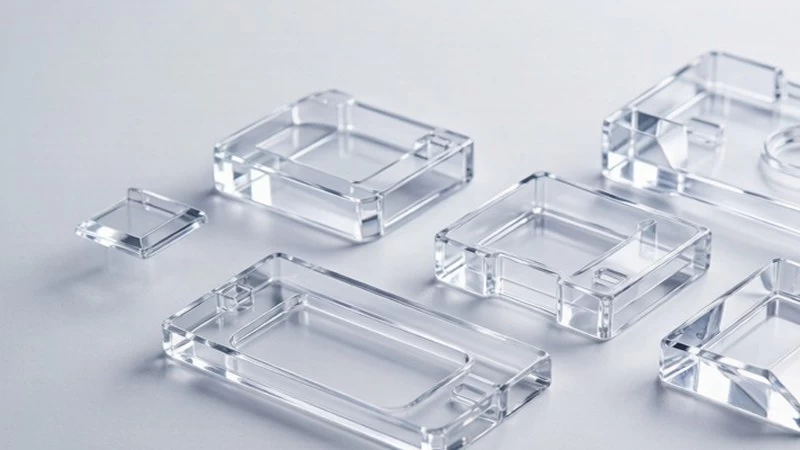
Transparent Plastic Components: Material and Mold Requirements
In This Guide
Transparent Material Options
Two materials dominate transparent molding: polycarbonate (PC) and polymethyl methacrylate (PMMA/acrylic). Each has strengths:
| Material | Light Transmission | Impact Resistance | Best For |
|---|---|---|---|
| PMMA (Acrylic) | 92% | Low | Lenses, light guides, display windows |
| PC (Polycarbonate) | 88–90% | High | Safety covers, impact-resistant windows |
| PC/PMMA blend | Tunable | Medium-High | Dual-layer optical parts |
| Clear ABS | 80–85% | Medium | Non-critical transparent housings |
Optical Clarity Requirements
Transparency is not just about material — it requires defect-free molding. Define clarity expectations:
- Light transmission percentage (e.g., >88% for PC)
- Haze level (typically <2% for optical parts)
- No visible flow lines, weld lines, or silver streaks
- No bubbles or inclusions in the transparent area
- Surface finish: SPI A1 or A2 (mirror polish)
Mold Requirements for Transparent Parts
The mold surface directly transfers to the part. Transparent parts require:
- Mirror-polished cavities and cores (SPI A1–A3)
- Diamond-polished steel (NAK80 or S136 for best results)
- Precision gate design to minimize flow marks
- Adequate venting to prevent burn marks and gas traps
- Optimized cooling to prevent sink and internal stress
Mold steel selection affects transparent part quality. NAK80 and S136 stainless steel achieve the highest polish for optical-grade parts. Confirm mold steel with the supplier during quoting.
Process Control for Clarity
Transparent parts are sensitive to process parameters. Key controls:
| Parameter | Effect on Transparency | Control |
|---|---|---|
| Melt temperature | Too low: short shot; too high: degradation | Within material range, upper end for flow |
| Mold temperature | Affects surface reproduction | Higher temp for better surface |
| Injection speed | Fast: shear marks; slow: flow lines | Optimize for uniform fill |
| Drying | Moisture causes bubbles and silver streaks | Dry PC/PMMA thoroughly (3–4 hours) |
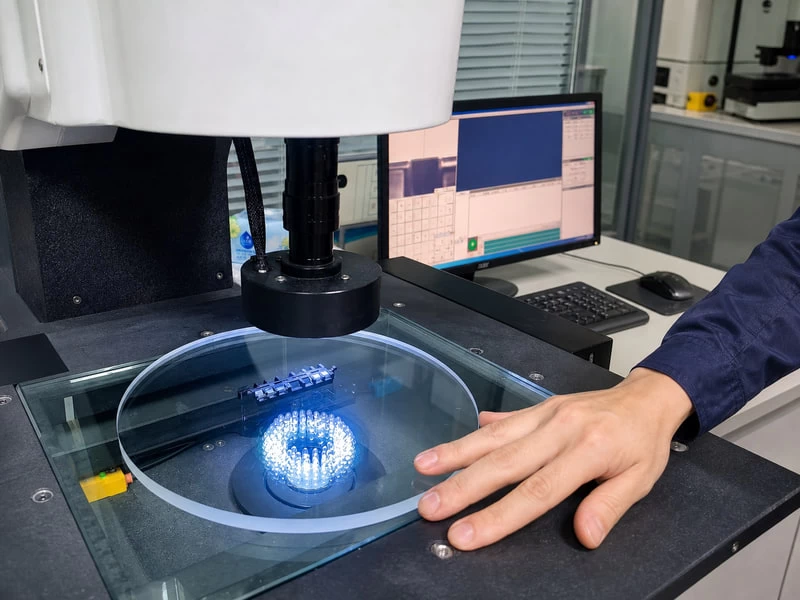
Optical measurement — verifying transparent part precision
Common Defects in Transparent Parts
Transparent parts show defects that would be invisible in opaque parts:
- Silver streaks — moisture in material, dry thoroughly
- Flow lines — gate location or injection speed issue
- Weld lines — visible where flow fronts meet
- Bubbles — trapped gas or moisture
- Sink marks — visible through transparent material
- Internal stress — visible as birefringence under polarized light
Inspection for Transparent Parts
Beyond dimensional checks, transparent parts require visual inspection:
- Visual inspection under bright light against dark and light backgrounds
- Polarized light inspection for internal stress
- Light transmission measurement for optical parts
- Surface inspection for scratches and flow marks
Hengmei Plastic Products molds transparent components including optical covers and light guide elements. Confirm optical and clarity requirements during quoting.
Frequently Asked Questions
Which is better for a transparent cover — PC or PMMA?
PC for impact resistance (safety covers, protective windows). PMMA for maximum clarity and lower cost (display windows, light guides). For parts needing both clarity and durability, PC/PMMA blends offer a balance.
Why do my transparent parts have silver streaks?
Silver streaks are caused by moisture in the material. PC and PMMA are hygroscopic and must be dried thoroughly before molding (typically 3–4 hours at 100–120°C). Confirm drying procedure with the supplier.
Can I achieve optical-grade clarity with standard mold steel?
Standard P20 steel can achieve SPI A3 finish, acceptable for some transparent parts. For optical-grade clarity (SPI A1), use NAK80 or S136 stainless steel. Confirm mold steel during quoting.
How are internal stress defects detected?
Internal stress appears as colored patterns (birefringence) when viewed under polarized light. A polariscope inspection reveals stress that is invisible under normal light. Request this test for critical optical parts.
Key Takeaways
Transparent plastic parts require PC or PMMA materials, mirror-polished molds (SPI A1), and strict process control. Define light transmission, haze, and defect tolerance. Dry material thoroughly, optimize injection parameters, and inspect under bright and polarized light. Use NAK80 or S136 mold steel for optical-grade clarity.
Discuss Transparent Part Requirements
Send your optical and material specifications for a manufacturing assessment.
To get an accurate quote, include these details in your inquiry:
- Part drawings
- Material preference (PC/PMMA)
- Light transmission target
- Surface finish (SPI grade)
- Optical vs decorative clarity
- Annual volume
Send your specifications to Hengmei Plastic Products and receive a tailored quotation.