
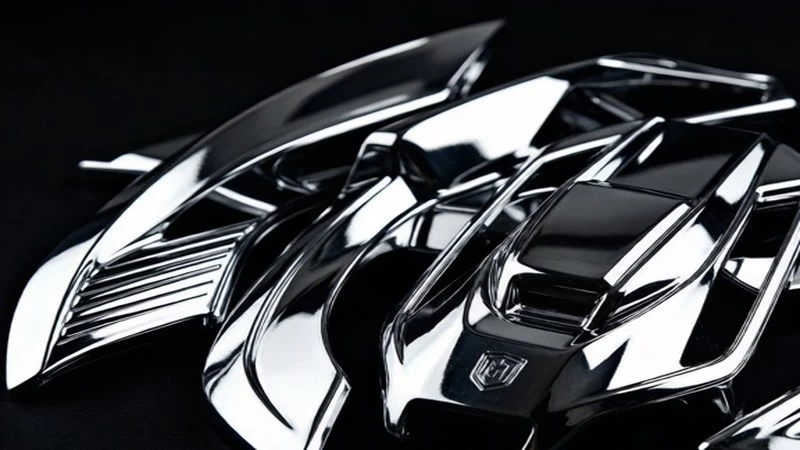
Electroplated Plastic Parts: Process and Quality Considerations
In This Guide
The Electroplating Process for Plastic
Plastic is non-conductive, so electroplating requires a multi-step pretreatment to create a conductive surface before metal deposition. The process includes:
- Surface conditioning — chemical etching to create adhesion sites
- Neutralization — remove residual etchant
- Sensitization and activation — apply catalytic layer
- Electroless nickel or copper deposition — create conductive base
- Acid copper plating — build smooth base layer
- Nickel plating — provide corrosion barrier
- Chrome plating — final metallic finish
Material Requirements
Not all plastics can be electroplated. ABS is the industry standard because its butadiene phase creates adhesion sites during etching. Material options:
| Material | Plating Grade | Notes |
|---|---|---|
| ABS (plating grade) | Excellent | Industry standard, reliable adhesion |
| PC/ABS (plating grade) | Good | Higher heat resistance than ABS |
| PC | Fair | Requires special pretreatment, verify with supplier |
| Other materials | Not recommended | Adhesion unreliable |
Always specify plating-grade ABS when ordering electroplated parts. Standard ABS may not have the butadiene distribution needed for reliable plating adhesion.
Design Guidelines for Plated Parts
Part design affects plating quality. Key guidelines:
- Avoid sharp corners — plating builds up on edges, use minimum 0.5 mm radius
- Maintain uniform wall thickness — uneven plating on thin and thick sections
- Position parting lines on non-visible surfaces — plating highlights parting lines
- Provide drainage holes — plating solution must flow through hollow parts
- Avoid blind holes deeper than 3× diameter — solution cannot circulate
Common Plating Defects
Recognizing plating defects helps buyers set quality expectations:
| Defect | Cause | Prevention |
|---|---|---|
| Poor adhesion | Insufficient etching or wrong material | Use plating-grade ABS, verify etch process |
| Rough surface | Contamination or rough base copper | Filter solution, polish base layer |
| Chrome discoloration | Temperature or current variation | Control bath parameters |
| Skip plating | Air trapped in blind holes | Redesign for solution flow |
| Blistering | Trapped gas or moisture | Dry parts thoroughly, control process |
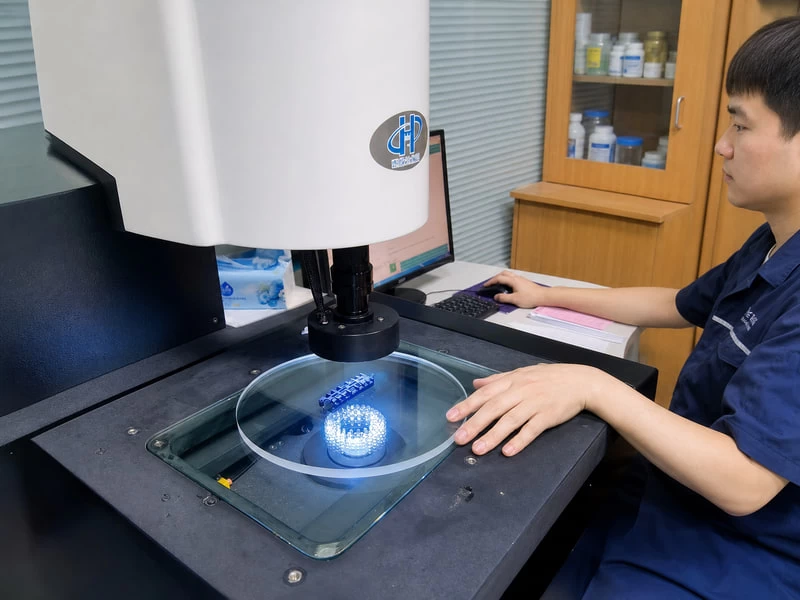
Surface inspection — verifying plating quality and coverage
Quality Testing
Plated parts require specific tests to verify quality:
- Cross-hatch adhesion test (ASTM D3359) — tape pull to check adhesion
- Thermal cycling — expose to hot and cold cycles, check for blistering
- Salt spray test (ASTM B117) — corrosion resistance evaluation
- Thickness measurement — verify plating thickness meets specification
- Appearance inspection — color, coverage, and surface defects
Environmental and Compliance Considerations
Chrome plating uses hexavalent chromium in traditional processes. Some regions restrict hexavalent chrome — trivalent chrome alternatives are available but may have slightly different appearance. Confirm regulatory requirements for your market.
Hengmei Plastic Products produces electroplated decorative plastic parts. Confirm material, plating specification, and testing requirements during quoting.
Frequently Asked Questions
Why must I use plating-grade ABS?
Plating-grade ABS has controlled butadiene particle distribution. During chemical etching, butadiene is selectively removed, creating microscopic adhesion sites for the conductive layer. Standard ABS may not have the right structure, causing adhesion failure.
How thick is the chrome layer on plastic?
Total plating thickness is typically 15–30 microns, including copper, nickel, and chrome layers. The chrome top layer is very thin (0.1–0.3 microns). Confirm thickness specification with your supplier.
Can plated plastic parts be used outdoors?
Properly plated ABS parts resist normal outdoor exposure, but prolonged UV and moisture can degrade plating over time. For outdoor applications, request UV and corrosion testing data. Confirm suitability with the supplier.
Is trivalent chrome different from hexavalent chrome?
Trivalent chrome is more environmentally friendly and compliant with stricter regulations. Appearance is slightly darker or bluer than hexavalent chrome. Confirm the chrome type with your regulatory requirements.
Key Takeaways
Electroplating on plastic requires plating-grade ABS, multi-step pretreatment, and rigorous quality testing. Design parts with radii, uniform walls, and solution drainage. Test adhesion (cross-hatch), corrosion (salt spray), and appearance. Confirm regulatory compliance for chrome type in your market.
Discuss Electroplated Parts
Send your plating specifications and part design for a manufacturing assessment.
To get an accurate quote, include these details in your inquiry:
- Part drawings
- Material (confirm plating-grade ABS)
- Plating specification
- Testing requirements
- Annual volume
- Destination market
Send your specifications to Hengmei Plastic Products and receive a tailored quotation.