
Overmolding and Insert Molding: When to Use Multi-Material Processes
In This Guide
Overmolding: Soft on Hard
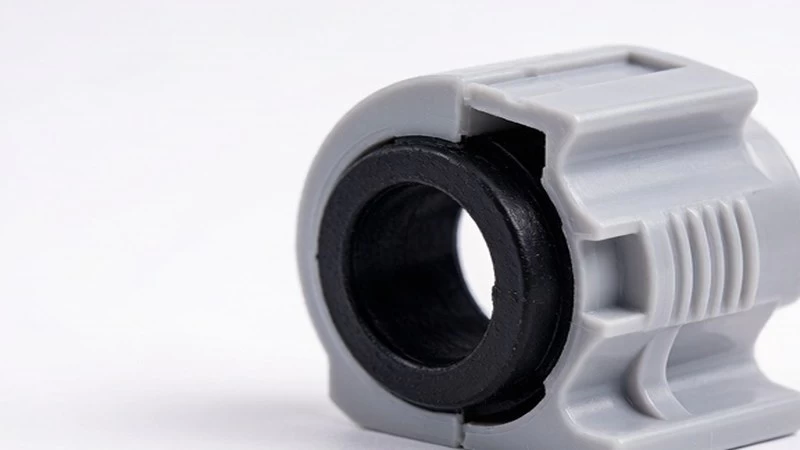
Overmolding molds a soft material (typically TPE or TPU) over a rigid substrate (ABS, PC, PP). Common applications include tool grips, seals, and ergonomic surfaces. The soft material bonds chemically or mechanically to the substrate.
| Substrate | Overmold | Bond Type | Application |
|---|---|---|---|
| ABS | TPE | Chemical | Tool grips, consumer products |
| PC | TPU | Chemical | Phone cases, medical grips |
| PP | TPE (PP-based) | Chemical | Sealed containers, toothbrushes |
| PA | TPE | Mechanical | Mechanical seals, gaskets |
Insert Molding: Metal in Plastic
Insert molding places a metal or pre-molded component into the mold before injecting plastic. The plastic flows around the insert, encapsulating it. Common applications include threaded inserts, electrical contacts, and structural reinforcements.
- Threaded brass inserts for repeated assembly
- Electrical contacts and connectors
- Metal reinforcements for high-stress areas
- Pre-molded components for multi-shot assemblies
When to Choose Overmolding
Overmolding is the right choice when:
- The part needs a soft grip or ergonomic surface
- A sealing surface is required (gaskets, O-ring seats)
- Vibration dampening is needed
- The part benefits from visual color contrast
When to Choose Insert Molding
Insert molding is preferable when:
- The part needs metal threads stronger than molded plastic
- Electrical conductivity is required at specific points
- A metal component provides structural reinforcement
- Assembly cost can be reduced by molding inserts in place
Tooling Considerations
Multi-material molds are more complex than single-material molds. Overmolding may use a rotary mold or transfer mold system. Insert molding requires automation or manual loading of inserts, which affects cycle time and cost.
| Factor | Single Material | Overmold | Insert Mold |
|---|---|---|---|
| Tooling cost | Baseline | +30–60% | +20–40% |
| Cycle time | Baseline | +20–40% | +10–30% |
| Complexity | Low | High | Medium |
| Material waste | Low | Medium | Low |
Material Bonding
For overmolding, material compatibility determines bond strength. Chemical bonds (compatible resin families) are strongest. Mechanical bonds (interlocks, holes) work when materials are incompatible. Confirm bond testing data with the supplier.
Hengmei Plastic Products supports insert molding and overmolding. Discuss your multi-material requirements to determine feasibility and tooling approach.
Frequently Asked Questions
Is overmolding more expensive than assembly?
Overmolding has higher tooling cost but lower per-piece cost at volume compared to assembling separate components. For volumes over 10,000 units, overmolding often costs less total. Confirm breakeven with the supplier.
Can any material be overmolded?
No. Material compatibility determines bond quality. TPE bonds well to ABS, PC, and PP. Some combinations require mechanical interlocks. Confirm material compatibility with the supplier before specifying.
How are inserts loaded into the mold?
Inserts can be loaded manually (slower, lower cost) or by robotic arm (faster, higher upfront cost). For high-volume production, robotic loading reduces labor and improves consistency. Confirm the loading method with the supplier.
What testing verifies bond strength?
Common tests include peel testing (ASTM D3330), pull testing, and environmental aging (thermal cycling, humidity). Request bond test data for your material combination.
Key Takeaways
Overmolding adds soft, functional, or sealing surfaces to rigid parts; insert molding embeds metal or pre-molded components. Both processes reduce assembly but require more complex tooling. Choose based on functional need, material compatibility, and volume economics. Multi-material molding pays off when it eliminates assembly steps at sufficient volume.
Discuss Multi-Material Molding
Describe your multi-material part requirements for a feasibility and cost assessment.
To get an accurate quote, include these details in your inquiry:
- Part function
- Material combination
- Bonding requirement
- Expected volume
- Assembly cost to replace
- Tooling budget
Send your specifications to Hengmei Plastic Products and receive a tailored quotation.