
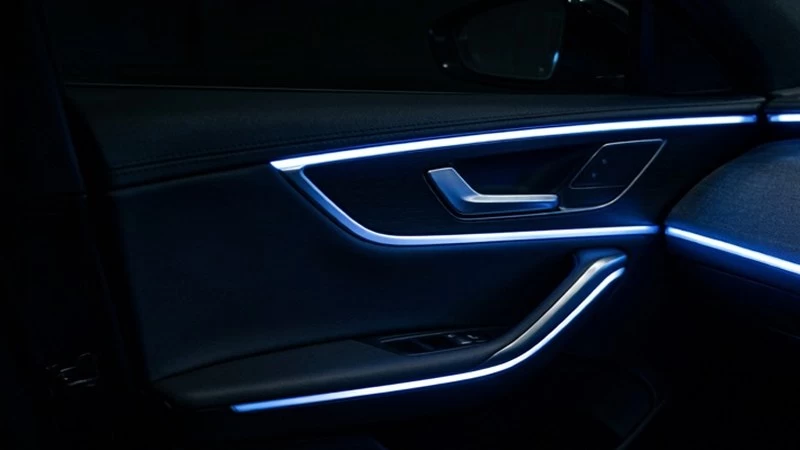
Automotive Ambient Lighting Trim: Design and Production Considerations
In This Guide
Material Selection for Light Transmission
Light guide and trim materials must transmit light efficiently while maintaining appearance when unlit. Common choices:
| Material | Light Transmission | Best For |
|---|---|---|
| PMMA (Acrylic) | 92% | Light guides, clear covers |
| PC (Polycarbonate) | 88–90% | Impact-resistant covers, structural trim |
| PC/PMMA blend | Tunable | Dual-layer light guides |
| Diffuser-grade PC | 70–80% | Even glow distribution |
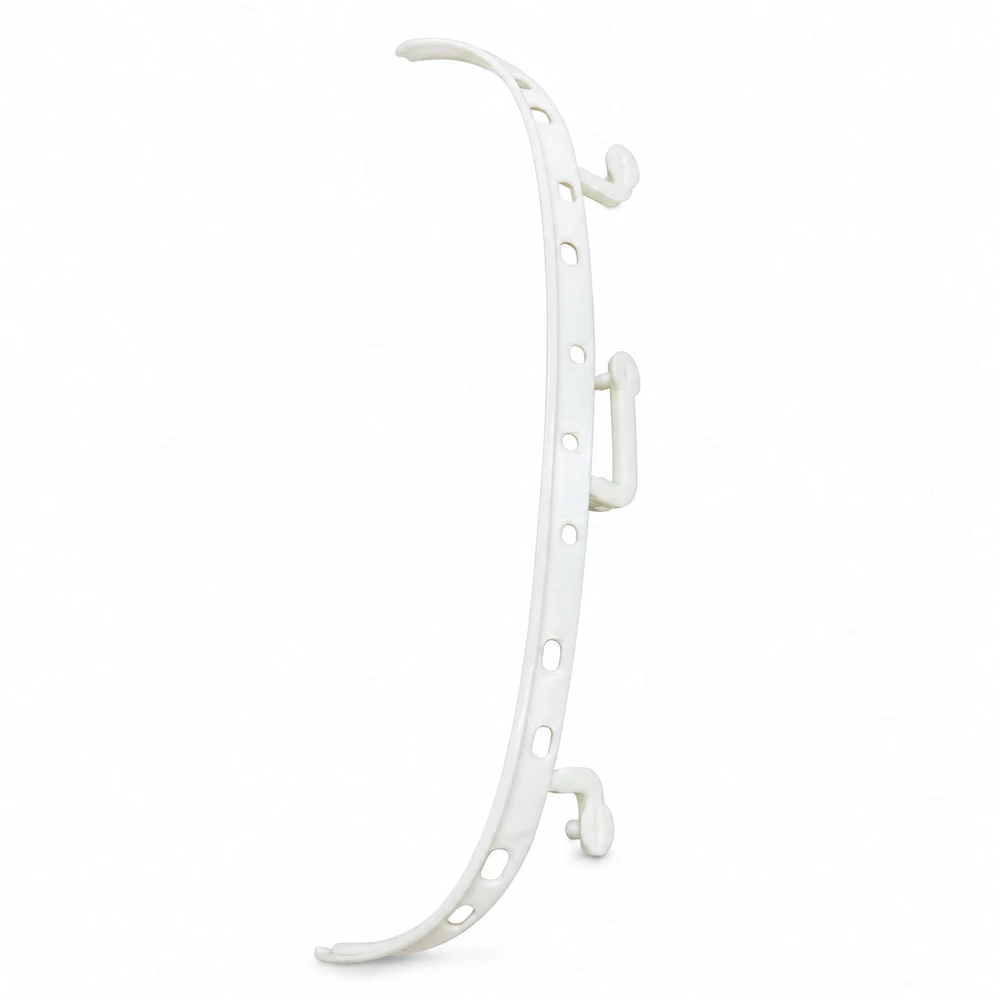
Ambient lighting trim — optical precision and surface finish
Light Guide Design Principles
A light guide distributes LED light evenly along the trim length. Design factors include:
- Wall thickness consistency for uniform light distribution
- Surface texture or micro-features to extract light
- LED coupling geometry for efficient light input
- Reflective backing to direct light toward the visible surface
Surface Finish Requirements
Visible ambient trim surfaces require high polish (SPI A2 or better) to avoid visible defects under illumination. Even minor scratches or flow lines become apparent when backlit. Confirm the supplier can achieve the required optical polish and provide samples for approval.
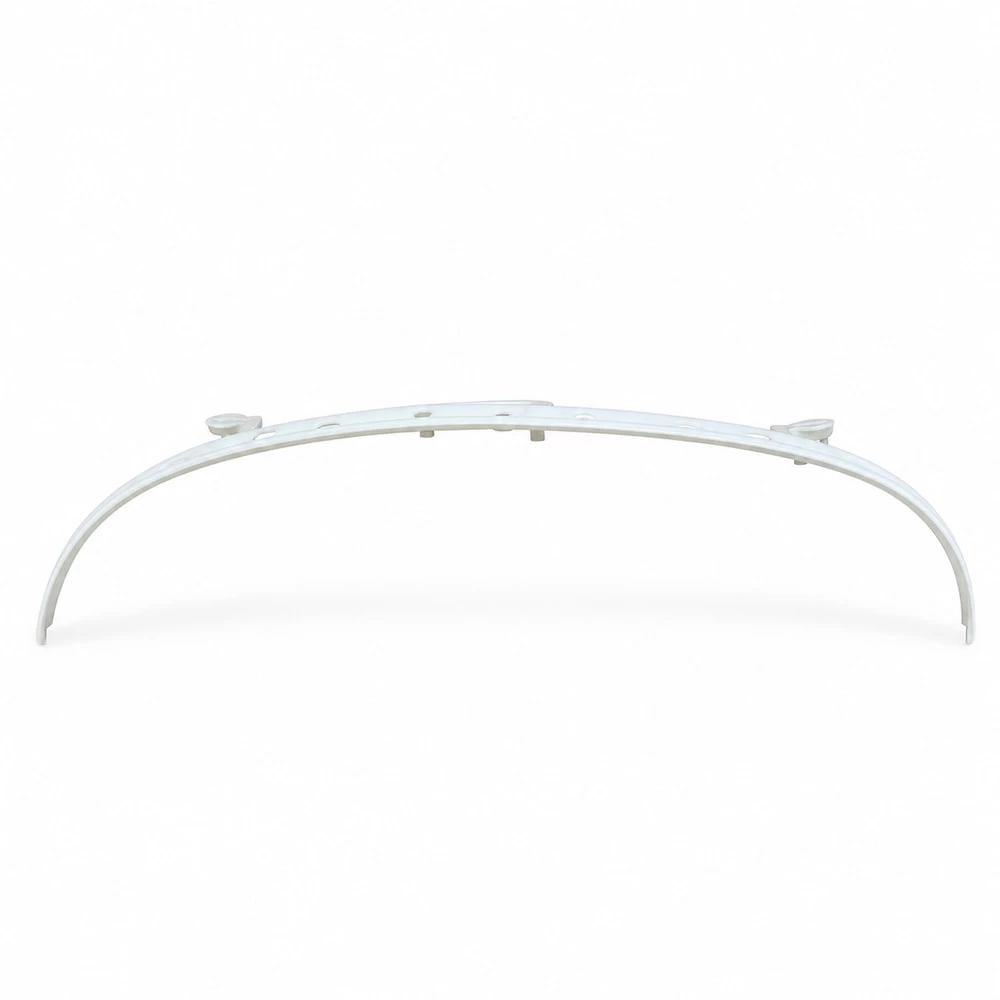
Surface detail — optical-grade finish for even illumination
Dimensional Tolerance for Assembly
Ambient trim fits into instrument panels, door panels, and center consoles. Fit tolerance is typically 0.3 mm or tighter to maintain gap-and-flush standards. Verify the supplier holds dimensional tolerances on mating surfaces and mounting features.
Thermal and UV Considerations
Interior trim operates at elevated temperatures (up to 85°C in direct sun) and faces UV exposure. Confirm the resin grade includes UV stabilizers and heat stabilizers appropriate for the vehicle specification. Request thermal aging and UV test data.
Production Quality Control
Ambient lighting parts require specialized QC:
- Optical transmission measurement per part
- Visual inspection under controlled lighting (lit and unlit)
- Dimensional verification of light guide geometry
- Surface inspection for scratches, flow lines, and sink
Hengmei Plastic Products produces ambient lighting trim components including the T88 series. Confirm specific optical and material requirements during quoting.
Frequently Asked Questions
What material is best for a light guide?
PMMA offers the highest light transmission (92%) and is cost-effective. PC provides better impact resistance. For dual-layer guides, PC/PMMA blends allow tunable optical properties. Confirm the choice with your lighting engineer.
How is light distribution verified?
Suppliers use integrating spheres and luminance cameras to measure light output and uniformity. Request test data showing brightness variation along the trim length. Visual inspection under controlled conditions supplements measurement.
Can the trim match a specific LED color?
Yes. Light guides are typically clear, with color determined by the LED. If the trim itself is tinted, provide the target color specification and request samples under the intended LED.
What tolerance can ambient trim hold?
Critical mating surfaces typically hold ±0.1 to ±0.2 mm. Light guide wall thickness tolerance is ±0.05 mm for consistent illumination. Confirm tolerances with the supplier based on your assembly specification.
Key Takeaways
Automotive ambient lighting trim requires optical-grade materials, precision light guide design, high surface finish, and tight dimensional tolerance. Verify material selection, thermal and UV stability, and production QC capabilities including optical measurement. These parts bridge lighting engineering and interior trim quality standards.
Discuss Your Ambient Lighting Project
Send your optical and material specifications for a manufacturing assessment.
To get an accurate quote, include these details in your inquiry:
- Part drawings and optical design
- Material preference
- LED specification
- Surface finish requirement
- Annual volume
- OEM standard
Send your specifications to Hengmei Plastic Products and receive a tailored quotation.