Prototyping to Production: The Plastic Part Development Timeline
In This Guide
Stage 1: Concept and Design (2–6 weeks)
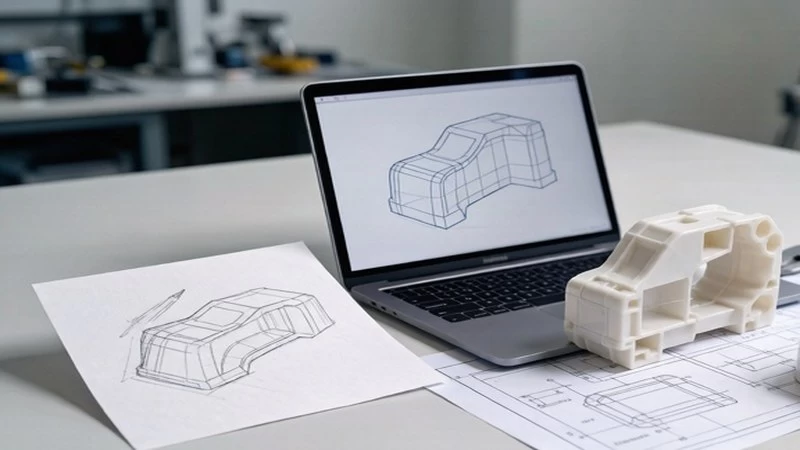
The design phase defines the part geometry, material, and function. Activities include:
- Industrial design and concept sketches
- 3D CAD modeling (STEP, IGES, native format)
- Design for Manufacturing (DFM) review
- Material selection and regulatory compliance check
- Mold flow analysis to predict fill and shrinkage
Stage 2: Prototyping (1–3 weeks)
Prototypes validate the design before tooling investment. Options include:
| Method | Lead Time | Best For |
|---|---|---|
| 3D printing (SLA/SLS) | 3–7 days | Form and fit validation |
| CNC machining | 5–10 days | Functional testing, material match |
| Urethane casting | 7–14 days | Low-volume pre-production samples |
Use prototypes to check fit, function, and appearance. Note that 3D-printed prototypes do not represent final material properties — confirm critical performance with CNC or cast prototypes.
Stage 3: Tooling Design and Fabrication (4–8 weeks)
After design approval, the mold is designed and built. This stage includes:
- Mold design (1–2 weeks) — cavity layout, gating, cooling, ejection
- Steel ordering and rough machining (1–2 weeks)
- Precision machining, EDM, and wire-cut (2–3 weeks)
- Mold assembly and fitting (3–5 days)
- Mold trial (T0) — first sample shots (2–3 days)
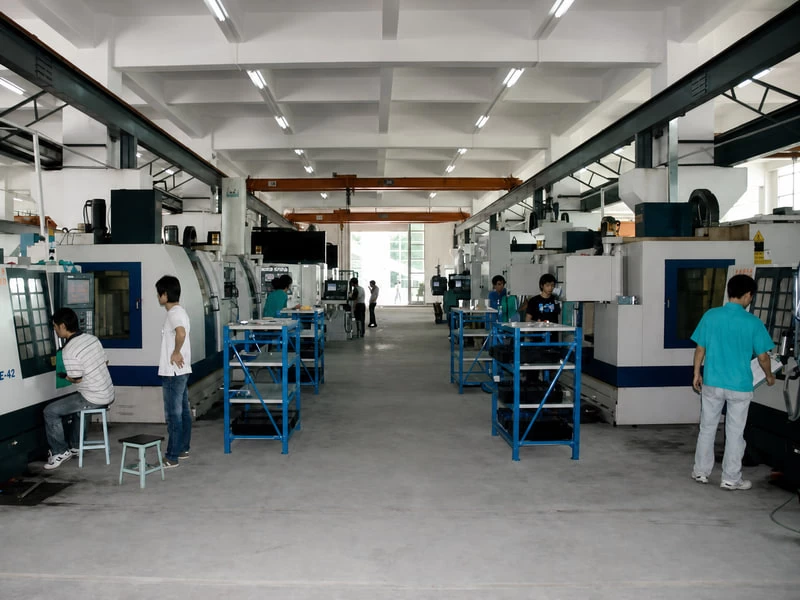
Mold fabrication — precision machining in progress
Stage 4: Sampling and Approval (1–3 weeks)
After T0, the supplier submits samples for review. This stage may require mold modifications:
- T0 samples — initial dimensional and visual check
- Mold adjustments based on T0 results
- T1 samples — revised parts for final approval
- First Article Inspection (FAI) — full dimensional report
- Buyer sign-off before mass production
Stage 5: Mass Production Setup (1–2 weeks)
After sample approval, the supplier prepares for production runs. Activities include material ordering, packaging setup, and process parameter optimization. The first production run may take longer as the process stabilizes.
Stage 6: Production and QC (ongoing)
Mass production runs at the agreed cycle time, with in-process QC and pre-shipment inspection. Typical production lead times:
| Order Size | Production Lead Time |
|---|---|
| 5,000–10,000 pcs | 7–14 days |
| 10,000–50,000 pcs | 14–25 days |
| 50,000–100,000 pcs | 25–40 days |
| 100,000+ pcs | 40–60 days (or scheduled runs) |
Hengmei Plastic Products offers integrated development from prototyping through production. Discuss your project timeline to align tooling and production schedules.
Total Timeline Summary
From concept to first shipment, a typical custom plastic part takes 10 to 20 weeks. Rush timelines are possible but increase cost and risk. Plan for:
- Design and prototyping: 3–9 weeks
- Tooling and sampling: 5–11 weeks
- Production setup and first run: 2–4 weeks
Frequently Asked Questions
Can I speed up the development timeline?
Partially. Prototyping can overlap with mold design. Express tooling is available at premium cost. But mold fabrication and sampling have minimum realistic times. Rushing these stages risks quality problems in production.
How many prototype iterations should I plan for?
Plan for 1 to 2 design iterations during prototyping, and 1 to 2 mold trial iterations (T0, T1). Complex parts may need more. Budget time for iterations in your project plan.
When should I order tooling?
Order tooling after the design is finalized and prototypes confirm function. Ordering too early risks mold modifications if the design changes. Confirm the design is frozen before committing to steel.
What causes timeline delays?
Common causes include design changes after tooling starts, material availability, mold trial issues requiring rework, and quality problems during sampling. Lock the design, confirm materials, and respond quickly to sample review to minimize delays.
Key Takeaways
A realistic plastic part development timeline runs 10 to 20 weeks from concept to first shipment. Each stage — design, prototyping, tooling, sampling, and production — has minimum realistic lead times. Plan iterations, lock the design before tooling, and respond promptly to sample reviews to stay on schedule.
Plan Your Development Timeline
Share your project scope and target launch date for a detailed development schedule.
To get an accurate quote, include these details in your inquiry:
- Product description
- Current design stage
- Target launch date
- Expected volume
- Material requirements
- Regulatory needs
Send your specifications to Hengmei Plastic Products and receive a tailored quotation.