
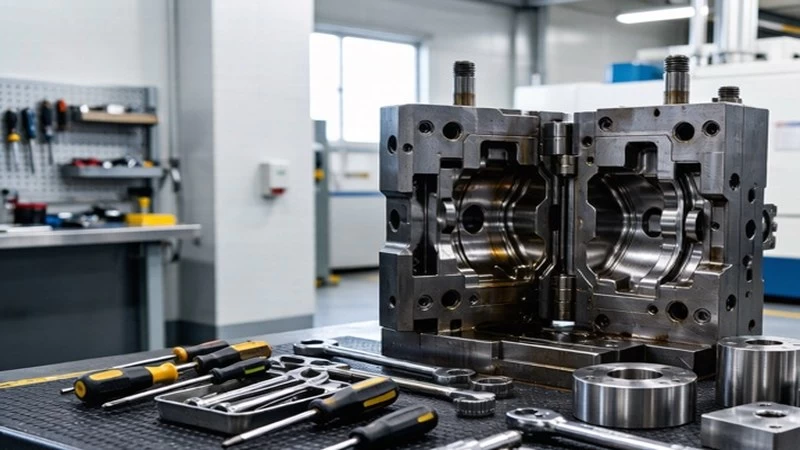
Mold Maintenance and Lifecycle Management for Injection Molds
In This Guide
Mold Life Expectancy
Mold life depends on steel type, part complexity, material molded, and maintenance quality. Expected cycles:
| Steel Type | Expected Cycles | Application |
|---|---|---|
| Aluminum (prototype) | 10,000–50,000 | Prototyping, low volume |
| P20 (pre-hardened) | 300,000–500,000 | General production |
| 718H (pre-hardened) | 500,000–800,000 | Medium to high volume |
| H13 (hardened) | 1,000,000+ | High volume, abrasive materials |
| NAK80/S136 | 1,000,000+ | Optical, high-polish parts |
Preventive Maintenance Schedule
Preventive maintenance prevents unexpected failures and quality degradation. A typical schedule:
| Frequency | Maintenance Activity |
|---|---|
| Per production run | Clean mold, inspect for wear, lubricate moving parts |
| Every 50,000 cycles | Deep clean, inspect ejector pins and slides |
| Every 100,000 cycles | Measure critical dimensions, check for wear |
| Annually | Full inspection, replace worn components, re-polish if needed |
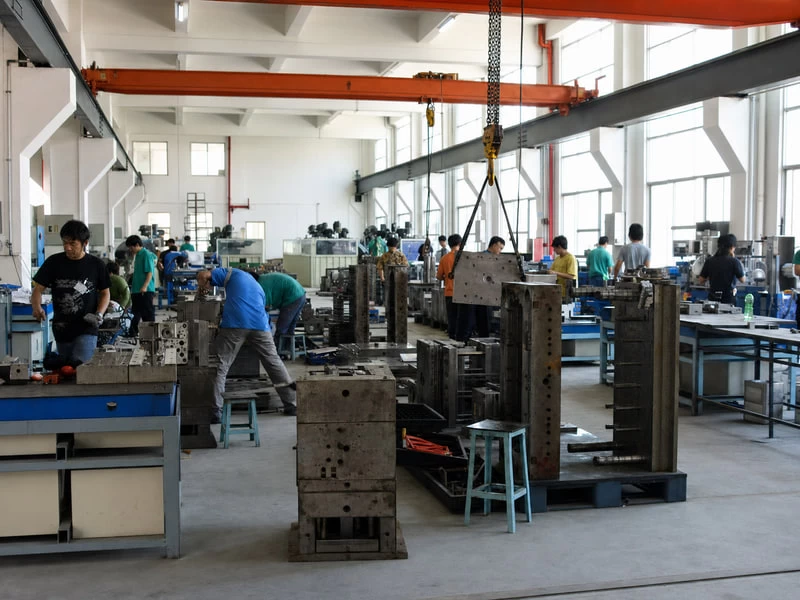
Mold assembly area — maintenance and fitting capability
Common Mold Wear Issues
Recognizing wear symptoms helps catch problems before they affect part quality:
- Parting line wear — causes flash, needs re-machining
- Gate wear — changes fill pattern, affects part quality
- Ejector pin wear — causes sticking or marks on parts
- Core polish degradation — affects surface finish
- Cooling channel scale — increases cycle time
- Slide and lifter wear — affects undercut features
Mold Storage Between Runs
When a mold is not in production, proper storage prevents corrosion and damage:
- Clean thoroughly — remove all resin residue
- Apply rust preventive oil to steel surfaces
- Store in a dry, climate-controlled area
- Close mold halves to protect parting line
- Document storage location and last production date
Hengmei Plastic Products stores customer-owned molds with rust preventive treatment and maintains records of production cycles and maintenance history.
Who Owns Mold Maintenance?
Mold maintenance responsibility should be defined in your agreement. Common arrangements:
| Arrangement | Supplier Responsibility | Buyer Responsibility |
|---|---|---|
| Full service | All maintenance and storage | Pay for replacement parts if needed |
| Shared | Routine maintenance | Major repairs or component replacement |
| Buyer-managed | Production only | All maintenance, buyer arranges service |
Most OEM arrangements include routine maintenance by the supplier. Confirm the arrangement and cost responsibility in your purchase agreement.
Signs Your Mold Needs Attention
Watch for these indicators during production:
- Increasing flash at parting line — mold wear
- Changing dimensions on critical features — core or cavity wear
- Surface finish degradation — polish loss
- Longer cycle times — cooling channel scale
- Sticking parts — ejector or draft issues
Mold Modification vs Replacement
When a mold reaches end of life or needs design changes, buyers face a decision:
- Modification — extend life or change part design (lower cost, limited scope)
- Cavity addition — increase capacity without new mold (medium cost)
- Full replacement — new mold for continued production (highest cost)
Track mold cycle count and maintenance history to plan replacement before quality degrades or production stops.
Frequently Asked Questions
How long does an injection mold last?
P20 steel molds typically run 300,000–500,000 cycles. Hardened steel (H13) can exceed 1,000,000 cycles. Actual life depends on material molded, part complexity, and maintenance quality.
Who pays for mold maintenance?
Routine maintenance (cleaning, lubrication, inspection) is typically included by the supplier. Major repairs or component replacement may be billed separately. Confirm maintenance responsibility in your purchase agreement.
Can a mold be modified to change the part design?
Yes, within limits. Minor changes (rib thickness, boss position) are possible. Major geometry changes may require a new mold. Discuss modification feasibility with the mold designer before committing.
How should molds be stored between production runs?
Clean, apply rust preventive oil, close the mold halves, and store in a dry environment. Document the storage location and last production date. Proper storage prevents corrosion and extends mold life.
Key Takeaways
Mold maintenance extends tool life and maintains part quality. Follow a preventive schedule (clean per run, deep clean every 50,000 cycles, full inspection annually). Store molds properly between runs with rust preventive. Track cycle count and wear indicators to plan modification or replacement before production stops.
Discuss Mold Maintenance
Ask about our mold maintenance and lifecycle management practices.
To get an accurate quote, include these details in your inquiry:
- Your mold type and steel
- Expected production volume
- Maintenance agreement needed
- Storage requirements
- Cycle tracking needs
- Modification plans
Send your specifications to Hengmei Plastic Products and receive a tailored quotation.