Electrical Box Enclosures: Choosing Plastic Injection Molded Housings
In This Guide
Common Enclosure Materials
The resin determines temperature resistance, impact strength, and flammability performance. Match the material to the operating environment and regulatory requirement.
| Material | Flammability | Typical Application |
|---|---|---|
| ABS | UL94 HB | General-purpose low-voltage boxes |
| PC/ABS blend | UL94 V-0 | Electronic device housings |
| Polycarbonate (PC) | UL94 V-0/V-1 | High-impact, transparent covers |
| PVC | UL94 V-0 | Weatherproof, corrosion resistant |
| Nylon (PA) | UL94 V-2 | High temperature, mechanical strength |
UL 94 Flammability Ratings Explained
UL 94 classifies plastic materials by after-flame time, dripping, and burn behavior. For US electrical applications, V-0 is the most common requirement for enclosed electrical components. Confirm the resin grade carries a valid UL Yellow Card for the specified rating.
Injection-molded electrical housings — precision and consistency
Ingress Protection (IP) Ratings
IP ratings define protection against solids and liquids. For outdoor or damp-location boxes, IP54 minimum is common; IP65 or IP66 for washdown environments. The enclosure design — gasket groove, screw bosses, wall thickness — determines whether the molded part achieves the target IP rating.
- IP20: Indoor, no moisture protection
- IP54: Dust-protected, splashing water
- IP65: Dust-tight, low-pressure water jets
- IP66: Dust-tight, powerful water jets
Wall Thickness and Structural Design
Enclosure wall thickness affects impact resistance and mold filling. Typical walls run 2.0 to 3.5 mm for small to medium boxes. Uniform wall thickness prevents sink marks and warpage. Confirm the supplier can mold ribs, bosses, and gasket grooves without compromising structural integrity.
Customization Options
Beyond standard enclosure sizes, custom molding allows integrated features that reduce assembly cost:
- Pre-molded cable entry knockouts
- PCB mounting bosses and standoffs
- Transparent inspection covers
- Integral gasket grooves
- Custom color for brand identification
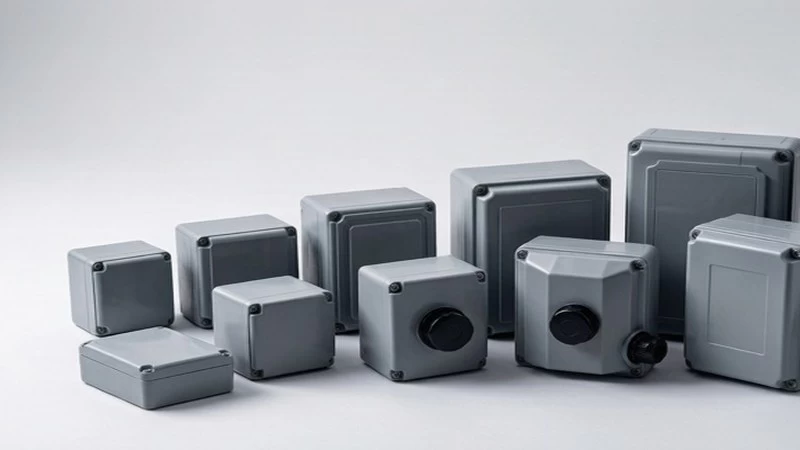
Hengmei Plastic Products molds electrical box enclosures in multiple series, including small electrical boxes and housing series for overseas markets.
Testing and Certification
For US electrical applications, confirm whether the enclosure requires UL listing as a complete unit or component recognition. The supplier should provide material certificates with UL Yellow Card references. For outdoor enclosures, request UV stability data for the resin grade.
Frequently Asked Questions
What UL rating do I need for an indoor electrical box?
UL 94 V-0 is standard for enclosed electrical components. For general-purpose low-voltage boxes, UL 94 HB may suffice depending on the application. Confirm the requirement with your certifying body or end customer.
Can I get a custom-sized electrical enclosure?
Yes. Custom molding allows any size within machine capability. Tooling cost depends on size and complexity. For lower volumes, consider modifying a standard enclosure with machining before investing in a custom mold.
How do I verify the IP rating claim?
Request test data from the supplier or arrange third-party IP testing. The IP rating depends on the complete assembly including gasket and cover screws, not just the molded box.
What is the typical tooling cost for a custom enclosure?
Tooling cost depends on size, cavities, and complexity. Confirm with the supplier after providing 3D drawings. Production molds for medium enclosures typically run 35 to 55 days.
Are UV-stable materials available for outdoor enclosures?
Yes. PC and PVC grades with UV stabilizers are available. Confirm the expected outdoor exposure duration and request weathering test data for the selected resin.
Key Takeaways
Selecting a plastic electrical enclosure means matching material to flammability and IP requirements, verifying UL ratings, and confirming structural design for the application. Custom molding enables integrated features that reduce assembly cost when volumes justify tooling investment.
Request an Enclosure Quote
Send your enclosure specifications and certification requirements for a detailed quotation.
To get an accurate quote, include these details in your inquiry:
- Enclosure dimensions and 3D drawings
- Material and UL rating
- IP rating required
- Annual volume
- Custom features
- Destination market
Send your specifications to Hengmei Plastic Products and receive a tailored quotation.