Injection Mold Tooling: CNC, EDM, and Wire-Cut Explained
In This Guide
CNC Machining: The Foundation of Mold Making
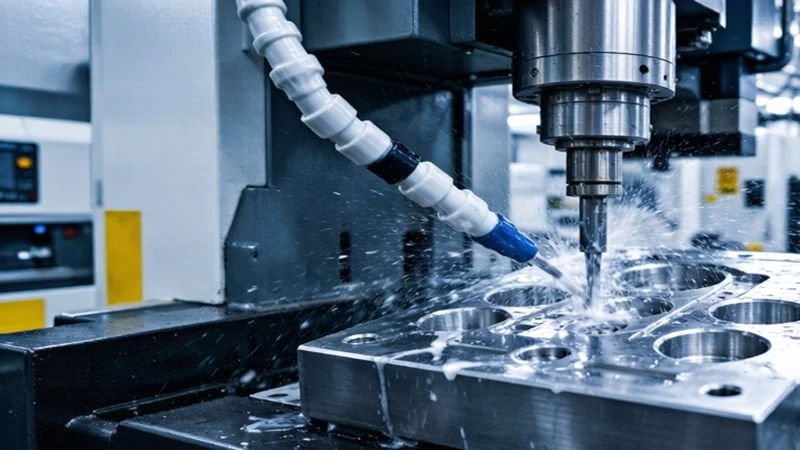
CNC milling removes material from mold steel to create the core and cavity geometry. Modern 3-axis and 5-axis CNC centers handle everything from roughing to precision finishing. CNC capability determines how quickly and accurately a mold can be built.
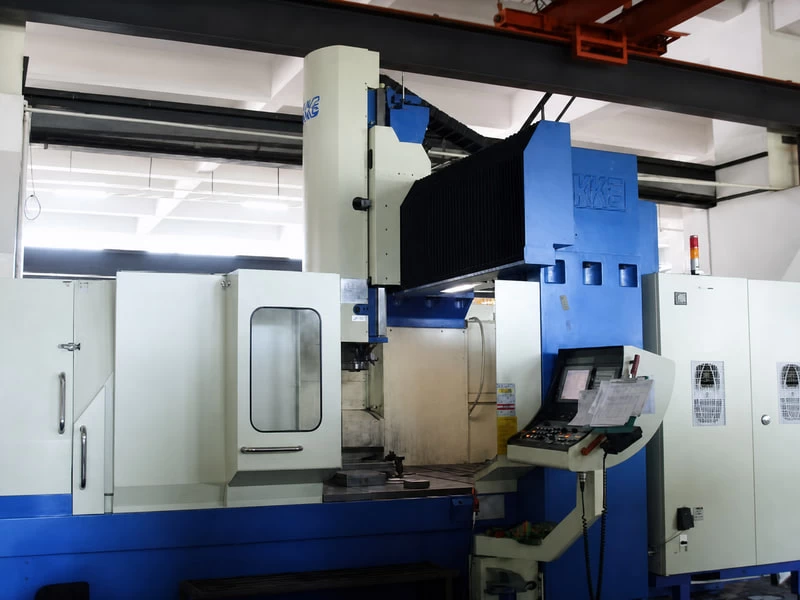
CNC mold machining center — precision steel cutting
EDM: Sinking Complex Geometry
Electrical Discharge Machining (EDM) uses sparks to erode conductive material, creating features that CNC cannot reach — deep ribs, sharp internal corners, and complex 3D contours. EDM is essential for parts with thin ribs or intricate detail that would be impossible to machine conventionally.
| Process | Best For | Limitation |
|---|---|---|
| CNC milling | Large surfaces, open geometry | Cannot cut sharp internal corners |
| EDM (sinker) | Deep ribs, blind pockets, detail | Slower than CNC, electrode cost |
| Wire-cut | Through-holes, tapers, cutouts | Only straight or tapered cuts |
Wire-Cut EDM: Precision Cutouts
Wire-cut EDM runs a thin brass wire through the mold steel to create precise through-cut features — ejector pin holes, cooling channels, and profile cutouts. Wire-cut achieves tolerances of ±0.005 mm, which is critical for fitting ejector pins and side cores.
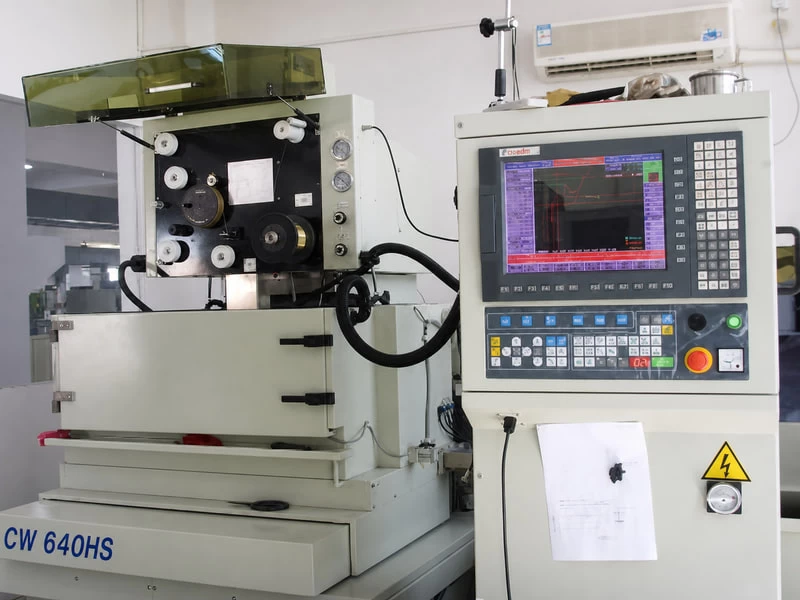
Wire-cut EDM — precision through-cutting for mold components
Mold Assembly and Fitting
After machining, mold components are hand-fitted by experienced toolmakers. This stage ensures cores, cavities, slides, and ejector systems move smoothly. The fitting quality directly affects parting line flash and mold life.
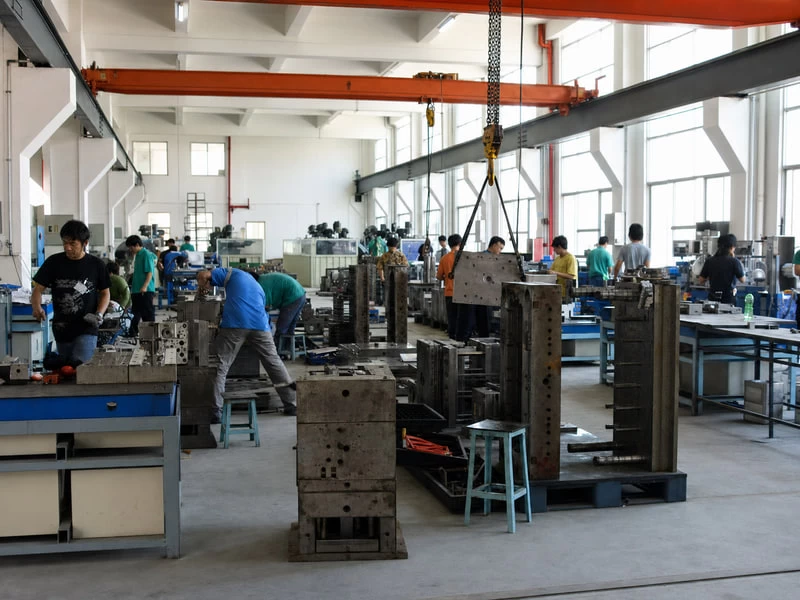
Mold assembly — experienced toolmakers fitting precision components
Mold Steel Selection
Steel grade determines mold life and cost. The supplier should recommend steel based on expected production volume and resin type.
- P20: General-purpose, 300,000–500,000 cycles
- 718H: Pre-hardened, good polish, 500,000+ cycles
- H13: Hardened tool steel, 1,000,000+ cycles
- NAK80: High polish, optical parts
Tooling Lead Time Factors
Tooling lead time depends on mold complexity, steel availability, and the supplier's machining capacity. A mold requiring complex EDM and wire-cut work takes longer than a straightforward CNC-machined mold. Confirm the lead time includes mold trial and sampling.
Hengmei Plastic Products operates CNC machining centers, EDM, and wire-cut equipment in-house, which reduces coordination delay and keeps mold trial under direct control.
Frequently Asked Questions
How do I know if my part needs EDM?
Parts with deep ribs (depth-to-width ratio over 3:1), sharp internal corners, or complex blind pockets typically require EDM. Your mold designer will identify EDM requirements during mold flow analysis.
What steel should I choose for my mold?
For volumes under 500,000 units, P20 is cost-effective. For 500,000 to 1,000,000 units, 718H or H13. For optical or high-polish parts, NAK80. Confirm with the supplier based on your resin and volume.
Can I see mold trial samples before approving production?
Yes. Mold trial produces sample parts (T0, T1) for dimensional and visual inspection. Approve samples before mass production. Confirm how many trial shots are included in the tooling quote.
What causes parting line flash?
Flash results from insufficient mold clamping force, worn parting line, or excessive injection pressure. A well-fitted mold with adequate clamping prevents flash. Request flash tolerance in your specification.
Key Takeaways
Mold tooling quality depends on the combination of CNC, EDM, and wire-cut capabilities. A supplier with all three processes in-house can control precision, lead time, and mold trial quality. Choose mold steel based on expected volume, and always approve trial samples before production.
Request a Tooling Assessment
Share your part geometry and volume for a mold design and tooling cost estimate.
To get an accurate quote, include these details in your inquiry:
- Part 3D drawings
- Material and surface finish
- Expected volume
- Mold life requirement
- Tolerance specification
- Destination
Send your specifications to Hengmei Plastic Products and receive a tailored quotation.