Automotive Interior Plastic Components: What Buyers Should Verify
In This Guide
Material and Appearance Requirements
Interior trim and structural parts use different resin families. Confirm the material grade, color stability under UV, and low-VOC performance — increasingly required by OEM specifications.
| Component | Common Material | Key Property |
|---|---|---|
| Seat control panel housing | ABS or PC/ABS | Impact strength, dimensional stability |
| Ambient lighting trim | PC or PMMA | Light transmission, surface gloss |
| Dashboard trim | PP or ABS | Heat resistance, low gloss |
| Door panel inserts | PP-T20 | Stiffness, texture retention |
Dimensional Tolerance and Fit
Interior parts must fit within gap-and-flush tolerances set by the OEM. A typical flushness tolerance is 0.5 mm or tighter. Verify the supplier has CMM measurement capability and can hold tolerance bands on critical mating surfaces.
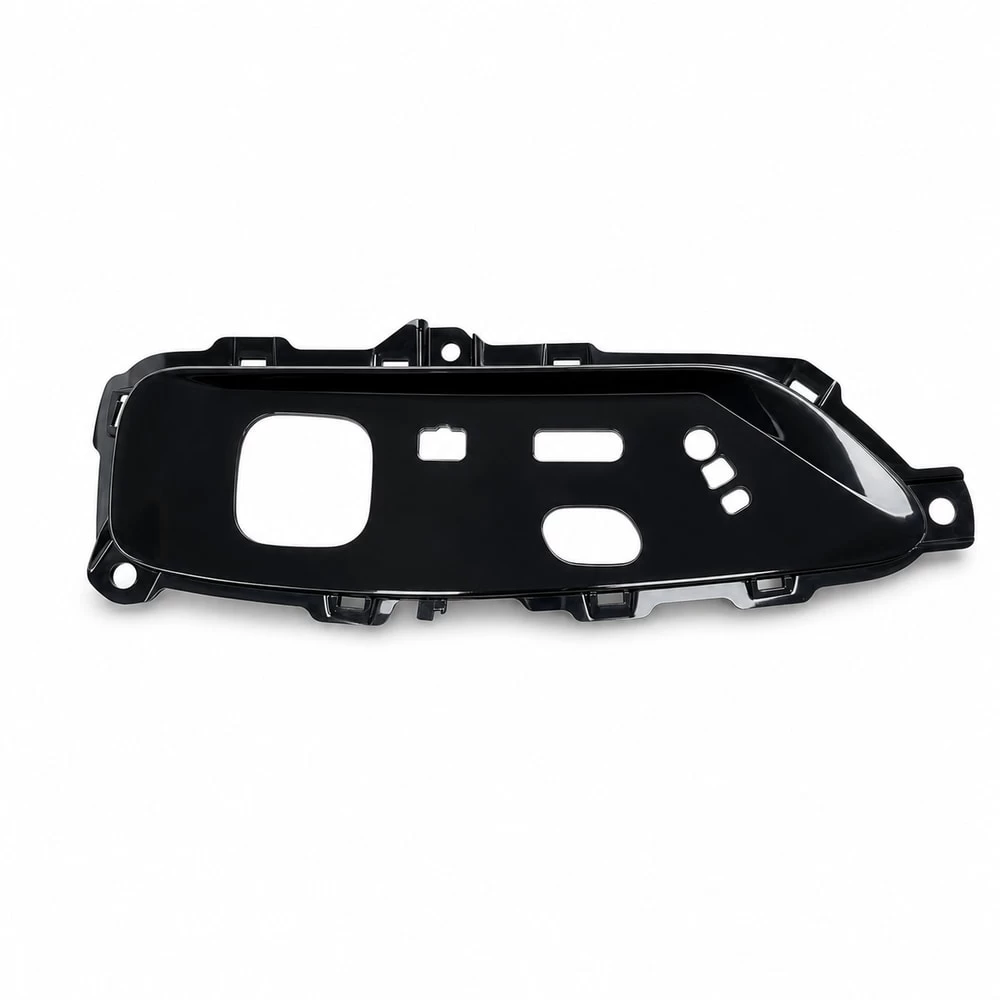
Automotive seat control panel — critical fit and finish requirements
IATF 16949 and PPAP Documentation
For automotive production, the supplier should hold IATF 16949 certification and deliver PPAP (Production Part Approval Process) documentation. PPAP level depends on the OEM requirement — Level 3 is common for new parts. Confirm the supplier can provide:
- Process flow diagrams and control plans
- DFMEA and PFMEA documentation
- Dimensional and material test results
- Capability studies (Cpk/Ppk) on critical characteristics
- Initial process capability data
Surface Finish and Texture
Interior visible surfaces often require specific SPI finish grades or custom textures. A grain transfer from the mold must match the master sample. Ask the supplier to provide finish samples under controlled lighting before tooling approval.
Low-VOC and Odor Testing
Many OEMs limit volatile organic compound emissions from interior parts. Confirm whether your specification requires VDA 270 (odor), VDA 277 (TVOC), or specific OEM standards. The supplier should be able to source low-emission resin grades and provide test data.
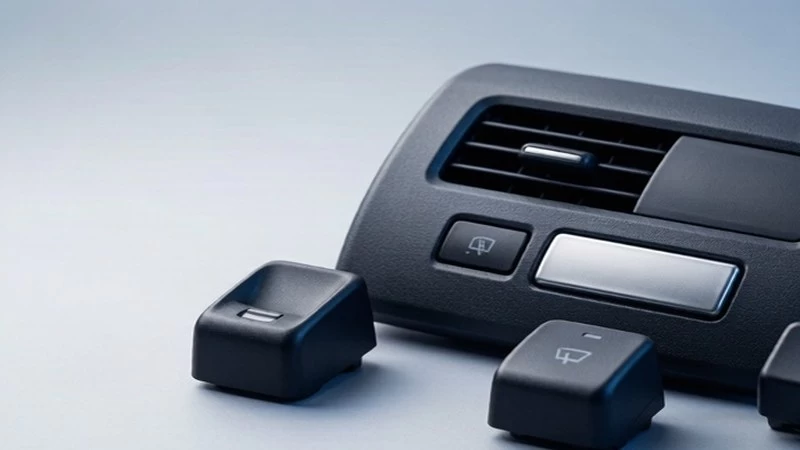
Hengmei Plastic Products produces automotive interior components including seat control panels and ambient lighting trim, with optical measurement and in-house inspection capabilities.
Frequently Asked Questions
What PPAP level should I require for a new automotive interior part?
PPAP Level 3 is standard for new parts submitted to OEM assembly plants. Confirm the specific level required by your customer or the final assembly specification.
Can the supplier match a specific interior color and texture?
Yes, if you provide a master sample or color code (Pantone, RAL, or OEM code). Texture requires a matching mold etch specification. Request finish approval samples before mold steel is cut.
What testing should interior parts pass before shipment?
Common tests include dimensional inspection, color and gloss verification, thermal cycling, UV aging, and VOC testing. The exact protocol depends on your OEM specification.
How are automotive interior parts packaged for export?
Parts are typically packed in returnable containers or single-use cartons with partition inserts to prevent contact damage. Confirm packaging requirements with your logistics team.
Key Takeaways
Automotive interior components demand strict attention to material grade, dimensional tolerance, surface finish, and regulatory documentation. Verify IATF 16949 certification and PPAP capability before committing to a supplier, and require finish samples and FAI approval before production release.
Discuss Your Automotive Interior Project
Send your part specifications and OEM requirements for a detailed manufacturing assessment.
To get an accurate quote, include these details in your inquiry:
- Part drawings and 3D data
- OEM material specification
- Annual volume and program timeline
- PPAP level required
- Surface finish and texture
- Destination assembly plant
Send your specifications to Hengmei Plastic Products and receive a tailored quotation.