How to Source Custom Injection-Molded Plastic Parts from China
In This Guide
Why US Buyers Source Injection-Molded Parts from China
China remains the largest injection molding base for export markets. Tooling costs often run 30 to 60 percent below US domestic pricing, and mature supply chains for resin, molds, and secondary processing keep piece prices competitive. For buyers ordering 10,000 to 1,000,000 units annually, the tooling amortization plus per-piece cost typically delivers a lower total landed cost than domestic production.
What You Need to Prepare Before Requesting Quotes
A precise specification package produces accurate quotes and fewer surprises. Collect the following before contacting suppliers:
- 3D CAD files in STEP or IGES format, plus 2D drawings with tolerances
- Material selection — resin grade, color (Pantone or RAL), and any filler or additive
- Expected annual volume and target piece price
- Surface finish — SPI A1 to D3, texture, gloss level
- Assembly and secondary operations — inserts, painting, printing, ultrasonic welding
- Regulatory requirements — FDA, UL, RoHS, REACH, Prop 65, or other compliance
How to Evaluate a Plastic Injection Molding Supplier
Not every factory that claims molding capability can meet your quality and volume requirements. Focus on these verification steps:
- Review machine tonnage range and quantity to confirm they can run your mold size
- Ask for in-house tooling capability — mold design, CNC, EDM, and trial molding under one roof reduce risk
- Request quality system documentation — ISO 9001 at minimum, IATF 16949 for automotive, ISO 13485 for medical
- Ask for production samples similar to your part geometry and material
- Verify inspection equipment — CMM, optical measurement, tensile testing
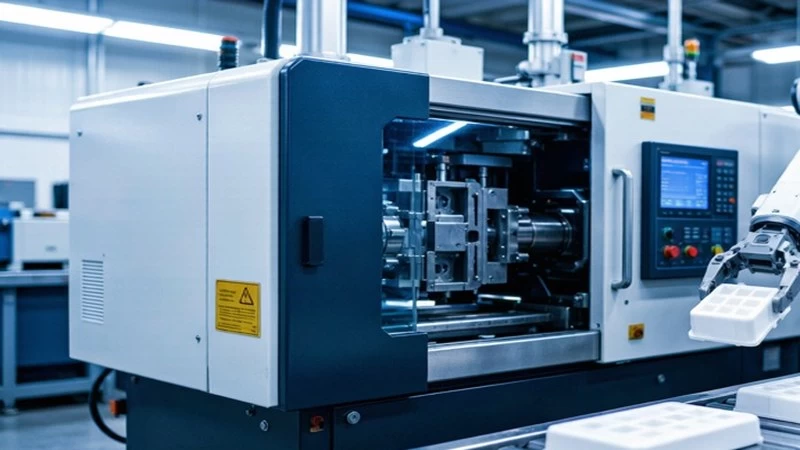
Hengmei Plastic Products operates CNC machining centers, EDM, wire-cut, and injection molding in one Dongguan facility, which shortens tooling lead time and keeps mold trials under direct control.
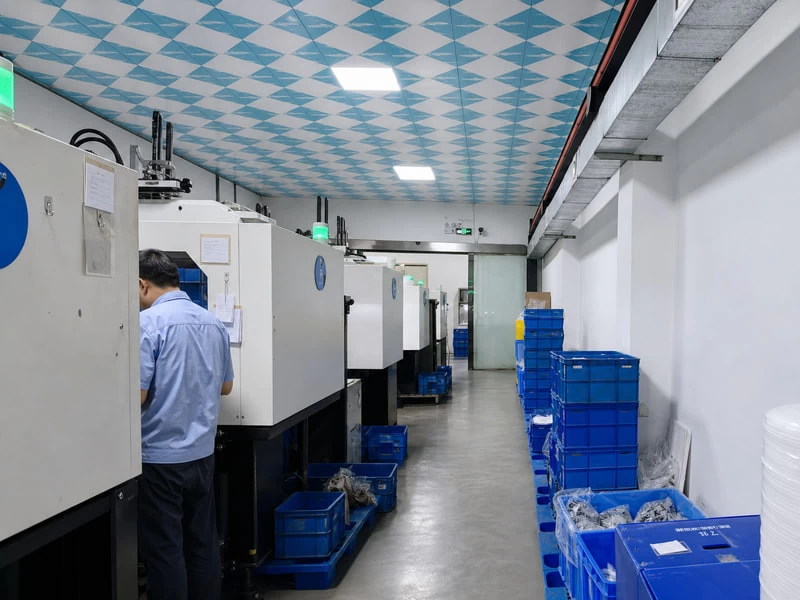
Injection molding workshop with organized material handling and machine layout
Understanding Tooling Quotes and Lead Times
A mold quote includes steel type, cavities, expected mold life, and trial samples. Single-cavity prototype molds may take 15 to 25 days; multi-cavity production molds typically run 30 to 60 days depending on complexity. Confirm whether the quote includes sampling, revisions, and mold maintenance.
| Mold Type | Typical Lead Time | Best For |
|---|---|---|
| Prototype (single cavity) | 15–25 days | Design validation, low volume |
| Pilot (1–2 cavities) | 25–35 days | Pre-production, market testing |
| Production (multi-cavity) | 35–60 days | High-volume manufacturing |
Sample Approval and First Article Inspection
Never approve mass production without a first article inspection (FAI). The FAI confirms dimensional accuracy, material properties, color match, and surface finish against your drawings. Document any deviations and require corrective action before releasing the mold for production.
Managing Mass Production and Quality
Once production starts, set up incoming inspection criteria, AQL sampling levels, and a defect tolerance. Request a production tracking report and pre-shipment inspection for each batch. A capable supplier provides dimensional reports, material certificates, and packaging photos before shipment.
Frequently Asked Questions
What is the typical minimum order quantity for custom injection-molded parts?
MOQ depends on part complexity and setup cost. For a production mold, expect 5,000 to 10,000 pieces per order as a starting point. Confirm the specific MOQ with the supplier based on your final specification.
Who owns the injection mold tooling?
The buyer typically owns the tooling if they paid for it. Include tooling ownership terms in your contract and confirm the supplier will store and maintain the mold between runs.
How long does a production mold last?
A standard P20 steel mold runs 300,000 to 500,000 cycles. Hardened steel molds (H13, 718H) can exceed 1,000,000 cycles. Mold life depends on material, part complexity, and maintenance.
Can I use my own resin or color masterbatch?
Yes. You can supply resin or specify a grade and let the supplier source it. Either way, confirm the resin supplier, grade, and lot traceability in writing.
What documents should I receive with each shipment?
Expect a dimensional inspection report, material certificate or COA, packing list, and photos of packed goods. For regulated products, include compliance test reports.
Key Takeaways
Sourcing custom injection-molded parts from China pays off when you invest in clear specifications, verify the supplier's tooling and quality capabilities, and manage each production batch with documented inspection. The upfront effort in sample approval and FAI prevents costly recalls and rework later.
Request a Custom Injection Molding Quote
Share your part drawings and volume targets to receive a detailed tooling and piece-price quotation.
To get an accurate quote, include these details in your inquiry:
- Part 3D drawings (STEP/IGES)
- Material and color specification
- Expected annual volume
- Surface finish and tolerances
- Regulatory requirements
- Destination port
Send your specifications to Hengmei Plastic Products and receive a tailored quotation.