
Secondary Processing in Plastic Manufacturing: CNC, Ultrasonic Welding, and Hot Melting
In This Guide
Why Secondary Processing Matters
Molded parts come out of the machine close to final shape, but some features are impractical or impossible to mold. Undercuts requiring side actions, tight tolerances on mating surfaces, and multi-part assemblies all benefit from secondary processing. A supplier with in-house secondary capability reduces lead time and coordination cost.
CNC Machining After Molding
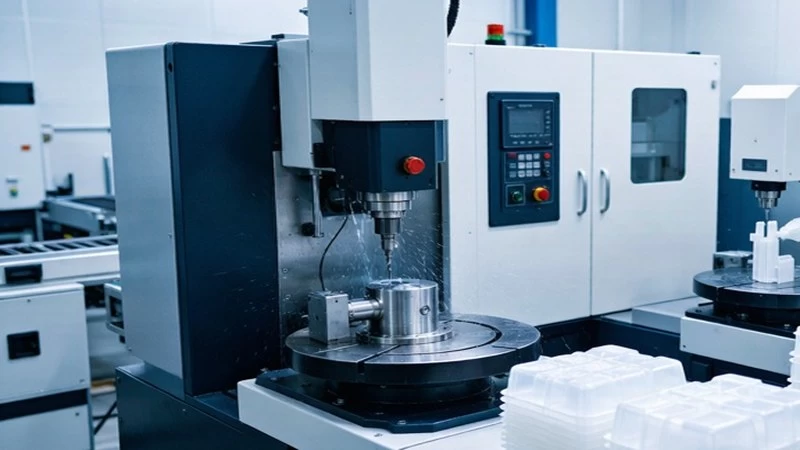
CNC machining removes material from molded parts to achieve tight tolerances, create features that molds cannot reach, or correct minor dimensional deviations. Common CNC applications include:
- Machining critical mating surfaces to ±0.02 mm tolerance
- Drilling precise holes that cannot be molded due to core angle
- Trimming flash or excess material from parting lines
- Creating threads or undercut features post-molding
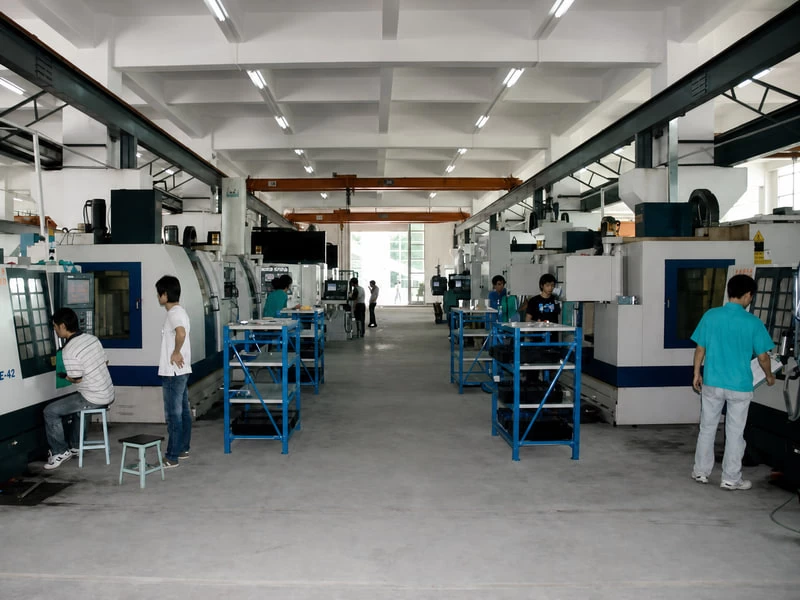
CNC machining — precision secondary processing capability
Ultrasonic Welding
Ultrasonic welding joins two plastic parts using high-frequency vibration that creates frictional heat at the joint interface. The materials melt and fuse without adhesives or fasteners. This process is common for:
- Sealing housings that must be watertight or airtight
- Joining two halves of an enclosure permanently
- Attaching internal components without visible fasteners
- Assembling filter housings and sealed containers
Ultrasonic welding requires compatible materials — both parts should be the same resin family. Different materials do not weld reliably. Confirm material compatibility during design.
Hot Melting (Heat Staking)
Hot melting uses a heated tool to soften plastic studs or bosses, then forms a head that locks a component in place. This process attaches metal inserts, circuit boards, or mounting plates to plastic housings without screws. It is fast, repeatable, and does not stress the surrounding material.
Drilling and Trimming
Simple secondary operations — drilling holes, trimming gates, removing flash — are often done manually or with dedicated jigs. While less sophisticated than CNC, these operations affect final part quality. A supplier with consistent trimming processes produces cleaner parts with fewer cosmetic defects.
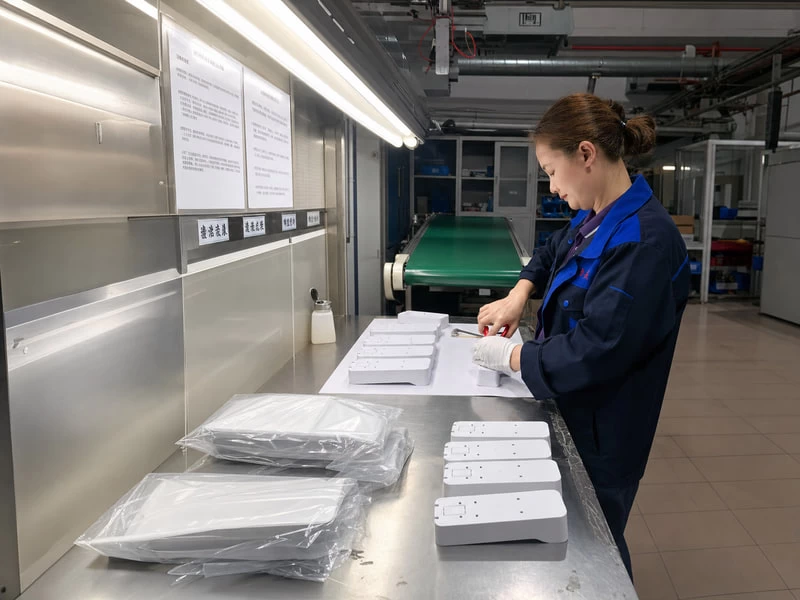
Parts finishing — manual trimming and inspection
Planning Secondary Operations in Your Project
Include secondary processing requirements in your initial specification. Waiting until after molding to add operations increases cost and lead time. Discuss these questions with your supplier:
- Which features require post-molding machining?
- What tolerance does each secondary operation need to achieve?
- Are parts welded or assembled, and what material compatibility is required?
- Does the supplier perform secondary operations in-house or outsource them?
Hengmei Plastic Products performs CNC machining, drilling, trimming, ultrasonic welding, and hot melting in-house as part of its integrated manufacturing workflow.
Frequently Asked Questions
Can secondary processing achieve tighter tolerances than molding alone?
Yes. CNC machining after molding can achieve ±0.02 mm on critical surfaces, tighter than typical molding tolerances of ±0.1 mm. This is useful for mating surfaces and precision fits.
What materials can be ultrasonically welded?
Same-family materials weld best — ABS to ABS, PC to PC, PP to PP. Some compatible blends (ABS/PC) also weld. Different material families generally cannot be ultrasonically welded reliably.
Is in-house secondary processing better than outsourcing?
In-house processing reduces lead time, transportation risk, and coordination cost. It also improves quality control since the supplier sees the full process. Outsourcing may be needed for specialized processes like anodizing.
How does secondary processing affect cost?
Each secondary operation adds labor and machine time to the per-piece cost. Minimize secondary operations through design for manufacturing — but plan for necessary operations that cannot be eliminated.
Key Takeaways
Secondary processing — CNC machining, ultrasonic welding, hot melting, drilling, and trimming — adds function and precision that molding alone cannot achieve. Plan these operations in your initial specification, confirm material compatibility for welding, and prefer suppliers with in-house capability to reduce lead time and coordination cost.
Discuss Your Secondary Processing Needs
Share your part requirements and post-molding operations for a complete manufacturing plan.
To get an accurate quote, include these details in your inquiry:
- Part drawings and assembly requirements
- Tolerances needing CNC
- Welding or joining requirements
- Insert or staking needs
- Annual volume
- Timeline
Send your specifications to Hengmei Plastic Products and receive a tailored quotation.