Injection Molding Machine Tonnage: Matching Your Part to the Right Machine
In This Guide
What Is Machine Tonnage?
Tonnage is the maximum clamping force a machine can apply to keep the mold closed against injection pressure. If clamping force is insufficient, the mold opens slightly and flash forms at the parting line. Machine tonnage ranges from small benchtop machines (20–50 tons) to large industrial presses (1000+ tons).
How to Estimate Required Tonnage
Required tonnage depends on projected part area, injection pressure, and a safety factor. A simplified estimate:
Tonnage ≈ (Projected Area in cm² × Injection Pressure in kg/cm² × Safety Factor) / 1000 Typical injection pressure: 300–500 kg/cm². Safety factor: 1.2–1.5. A part with 200 cm² projected area at 400 kg/cm² and 1.3 safety factor needs about 104 tons of clamping force.
Tonnage Ranges and Part Sizes
Different part sizes require different tonnage ranges. A factory with a wide tonnage range can produce diverse parts:
| Tonnage | Part Size | Typical Application |
|---|---|---|
| 50–100T | Small parts | Electronic components, small housings |
| 100–200T | Medium parts | Appliance housings, automotive trim |
| 200–350T | Large parts | Dashboard panels, large enclosures |
| 350–450T | Extra large | Bumpers, large structural parts |
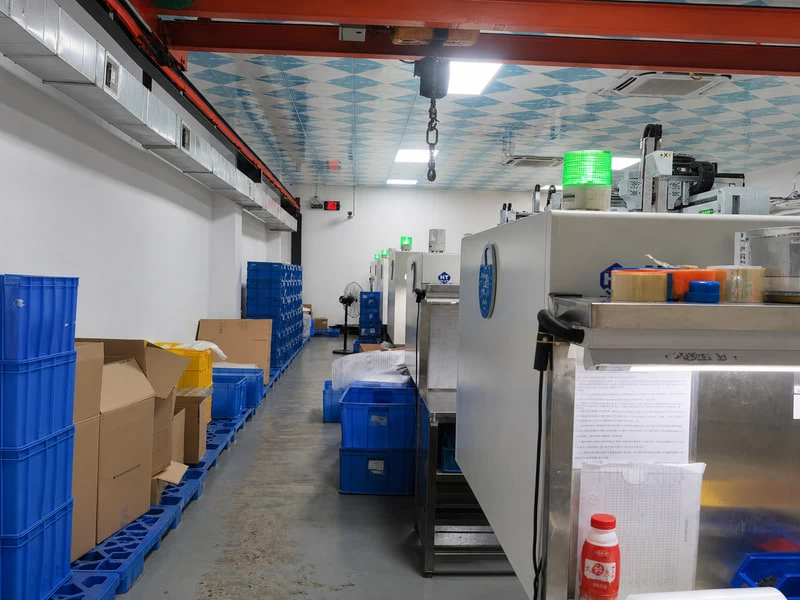
Production line — multiple tonnage machines for flexible capacity
Why Tonnage Range Matters
A factory with machines spanning 60 to 450 tons can run everything from small electronic parts to large automotive components. This flexibility benefits buyers who need multiple part sizes or who plan to scale from prototype to production without changing suppliers.
Hengmei Plastic Products operates 29 injection molding machines ranging from 60 to 450 tons, supporting prototypes, low-volume runs, and mass production across diverse part sizes.
What Happens When Tonnage Is Wrong
Using the wrong tonnage causes production problems:
| Problem | Cause | Result |
|---|---|---|
| Flash | Insufficient clamping force | Excess material at parting line |
| Short shot | Machine too large, over-compacted | Incomplete fill (rare) |
| Slow cycle | Machine oversized for part | Higher per-piece cost |
| Mold damage | Excessive tonnage on small mold | Mold deformation or breakage |
Questions to Ask Your Supplier
Verify machine capability before placing an order:
- What is your tonnage range?
- How many machines do you have in the range my part needs?
- Can you run both prototype and production volumes?
- What is the largest part you can mold?
- Do you have machines available for my production schedule?
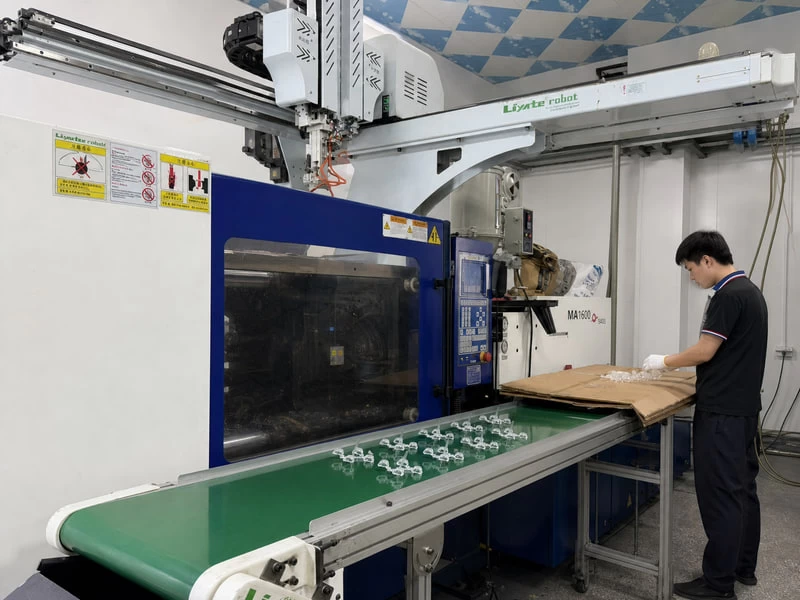
Robotic system — efficient part removal on tonnage-matched machine
Multi-Cavity Molds and Tonnage
Multi-cavity molds increase projected area, requiring more tonnage. A 4-cavity mold needs roughly 4× the tonnage of a single-cavity mold for the same part. Confirm that the supplier's machine tonnage supports your planned cavity count.
Frequently Asked Questions
How do I know what tonnage my part needs?
Provide your part's projected area (the footprint when viewed from the injection direction) to the supplier. They calculate required tonnage based on material, injection pressure, and safety factor. As a rough guide, 1 ton per square inch of projected area is common.
Can a machine with more tonnage than needed cause problems?
Excessive tonnage on a small mold can damage the mold or slow the cycle, increasing per-piece cost. Match the machine to the part — a capable supplier selects the right machine from their range.
Why does a factory need multiple tonnage machines?
Different parts need different tonnage. A factory with only large machines wastes money on small parts; only small machines cannot run large parts. A range like 60–450 tons covers most common applications.
Does tonnage affect part quality?
Indirectly. Correct tonnage prevents flash and ensures consistent molding. But tonnage alone does not determine quality — mold design, process parameters, and material handling are equally important.
Key Takeaways
Machine tonnage determines the part sizes a factory can produce. Calculate required tonnage from projected area, injection pressure, and safety factor. A supplier with a wide tonnage range (e.g., 60–450 tons) offers flexibility for diverse parts and volumes. Verify machine availability and match tonnage to your part to avoid flash, slow cycles, and mold damage.
Verify Machine Capability
Share your part dimensions for a tonnage and machine suitability assessment.
To get an accurate quote, include these details in your inquiry:
- Part dimensions and projected area
- Material
- Expected volume
- Cavity count if known
- Production timeline
- Special requirements
Send your specifications to Hengmei Plastic Products and receive a tailored quotation.